

How St Aloysius’ College gave pupils ownership of their learning
GetSet & ITZA team
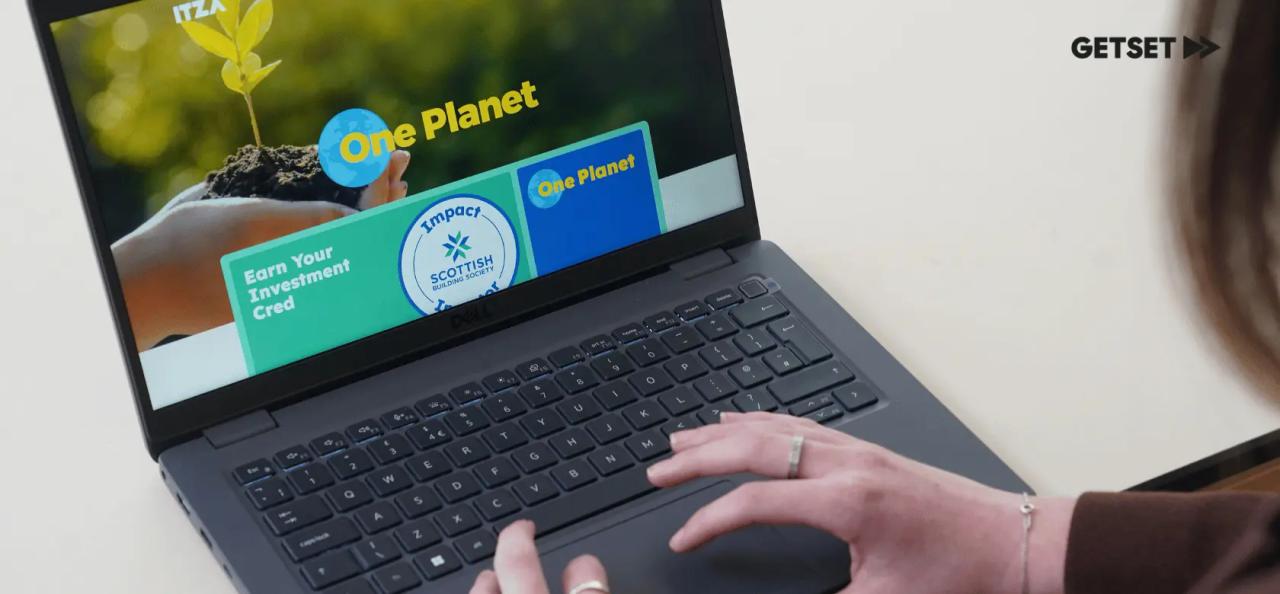
Ross McLean wanted more interactive, independent learning in his teaching. Learning for sustainability is his passion. ITZA looked like a way forward. But first, he tried it himself.
“I wanted to test the product before I let pupils loose on it.”
He saw the One Planet Challenge as “a real place to look at conservation education”. It covers ground that often sits at the edges of the curriculum.
Starting with the Eco Club
Ross brought the One Planet Challenge to the school’s eco and sustainability group. Around ten pupils took it on. “They really kind of ran with it.”
Over two to three months, several pupils completed the challenge. Some went on to apply for the Villar’s programme.
He used it in class too. Last year that meant three or four periods, with about 20 minutes each time set aside for independent work. He is planning for more this year.
Pupils in the driving seat
Pupils worked on their own for 80 to 90% of that time. Ross kept the direction light: “Just please go and look at one of these areas.” After that, it was “free rein”.
ITZA has many pathways, so pupils could follow different topics within the same focus.
“There is no right answer in that regard. There are multiple pathways and multiple ways that you can go, and it’s equally as successful.”
The biggest surprise came from his quietest pupils. In a structured lesson, even cold calling got a sheepish answer. Given room to explore, they came to him.
“They wanted to tell me about it rather than me telling them what they should be learning.”
“It was something that they found out themselves.”
The class favourite? The thorny dragon in Australia. Its spiky body helps it avoid losing water through its skin. Pupils found it amazing and wondered why we don’t have spikes too.
Not a filler
Ross’s role changed, but it didn’t shrink.
“It becomes much more facilitator rather than leader, but facilitating is leadership.”
Independent learning still needs planning. Different pathways bring different answers. The teacher has to bring that learning back together and review it.
“Doing any of this is not filler. It’s not something that you should be doing just because you haven’t prepared.”
Getting to know the platform took him a couple of hours. “Once you’ve done it once, it takes far less time.”
Pupils got into it fast, especially the videos. But they also had to read and work with other sources. Ross sees that as “a different way of thinking”.
The fiddly part was set-up: email addresses and school firewalls. His advice is to be generous with yourself in the first year. “We’re not going to do it right the first time around. But we can see the value.”
Next: GetSet with S1
This year Ross plans to bring GetSet to all of S1. That is around 72 pupils across three classes of 24 to 25.
GetSet gives pupils a clear first step into independent learning. Each session opens with a classroom hook, then 20 minutes of independent work. Ross thinks that structure will help.
“That structure will be more beneficial in the classroom because teachers can actually physically allocate that timing.”
And if a session runs over? “You roll with that.”
His message to other teachers
In Scotland, learning for sustainability is an entitlement. But Ross points out that ITZA goes much wider: financial literacy, physics, classics, history. “There’s space for everybody.”
“Chalk and talk isn’t something that we should be promoting anymore. We should be utilising every tool in our arsenal to make teaching easier and education better.”
Ross McLean, Teacher of Geography and Lead Eco Teacher, St Aloysius' College, Glasgow, Scotland.
_________________________________
GetSet is here to help students become independent learners and explore a growing range of real-world subjects, and our learning resources for teachers looking to bring the class together on subjects beyond their specialism. From Financial Literacy and Space Science to Sustainability and Creative Arts.
Try it now!
Related articles
 Learners
How Independent Learning Led Me to ITZA
From high school graduate to Swiss Alps attendee to ITZA intern—18-year-old Dana Rennie reflects on how a simple nudge from a teacher set off a life-changing chain reaction. Read how pursuing a passion for geography and sustainability turned skepticism into a winning opportunity, global friendships, and a clear path forward.
 Independent Learning
Question Line: Tracing Student Thinking Through Teacher Questioning
The thinking behind questioning has been examined in several studies including Dillon (2009) which examines the purpose of questioning from different perspectives. Dillon argues that understanding questioning depends on fundamental questions in education related to seven elements: teacher, student, subject, circumstance, aim, activity, and result.
 Insights
“The Evidence Doesn’t Speak for Itself”: Teaching Students to Think Historically about Fake News
“Miss, how do you know that this isn’t AI-generated?” one student quips as I project a famous scene from the Bayeux Tapestry onto the board. The comment sends a ripple of laughter through the class, but the question is more perceptive than it first appears. In fact, despite sighing in exasperation at the tenth interruption of the lesson, I find it reassuring...